Quick answer
Measure doorways, clear access routes, remove small items from drawers and disassemble anything that can safely come apart before collection day.
Why preparation matters
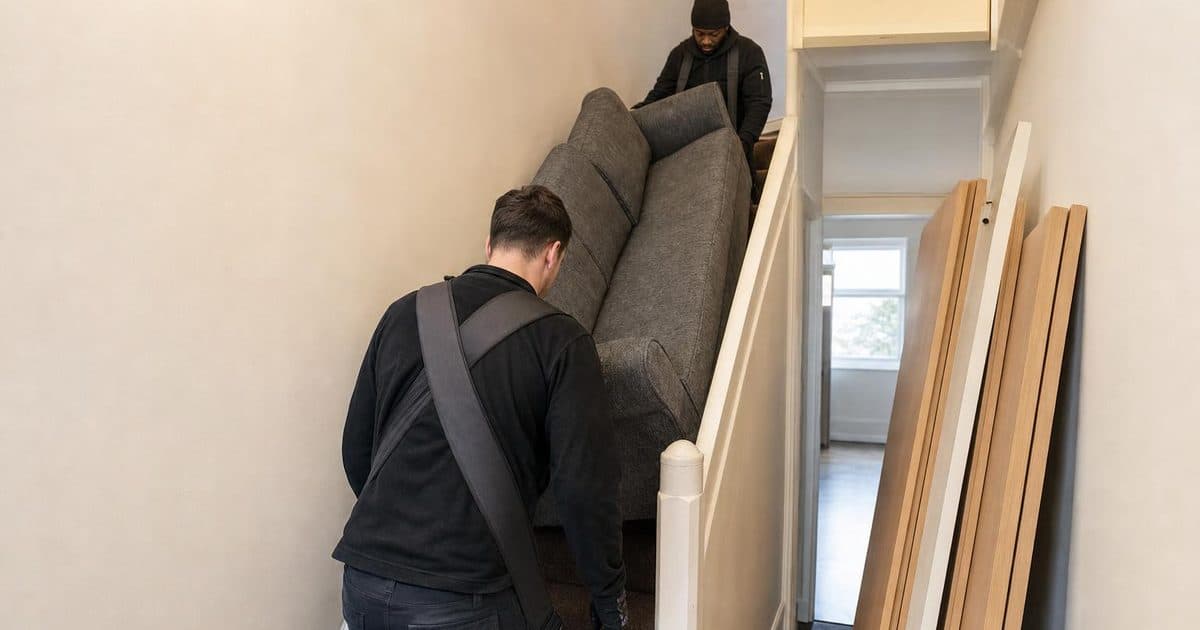
Furniture removal goes more smoothly when the item can be reached easily, carried safely and moved without last-minute delays. That is especially useful in Croydon homes with narrow staircases, shared hallways, tight front doors or limited parking near the property.
Good preparation also helps protect floors, walls and the furniture itself. If a sofa, wardrobe or bed frame needs to be turned at an angle to leave the property, having a clear route makes the job faster and reduces avoidable damage.
Measure and clear the route
Before collection day, check the size of the furniture and the spaces it has to pass through. The main points to measure are the widest part of the item, doorways, hallways, landings and stair turns. If an item was moved into the property in pieces, it may need to come out the same way.
Check doorways and stairwells
Take note of low ceilings, tight corners, banisters and anything fixed in place that could obstruct movement. If the item is large, it helps to open internal doors fully and keep them secured so they do not swing shut while the team is carrying furniture out.
Clear hallways and outdoor access
Remove shoes, coats, bins, children’s toys and any other items from the path. Outside, make sure the front garden, driveway or entrance area is clear enough for safe lifting and loading. If access is through a shared entrance, let neighbours know if necessary so the route stays unobstructed.
Empty, disassemble and protect items
Most furniture is easier to move when it is lighter and broken down into manageable pieces. Before the team arrives, empty drawers, cupboards, cabinets and storage sections. This prevents loose items falling out and makes lifting safer.
Remove loose items and pack small parts
Keep screws, brackets, shelves and other fittings together in a labelled bag or container. Tape the bag to the furniture if it is staying with the item for removal, or keep it somewhere safe if you may need it later. It is also sensible to remove cushions, bedding, glass shelves and other detachable parts.
Disassemble only what is safe
Only take apart furniture if it can be done safely and without damaging the item. Beds, flat-pack wardrobes and some desks are often suitable for dismantling, but heavily joined, antique or upholstered items may be better left intact. If you are unsure, it is better to leave the item as it is and mention it in advance.
| Furniture item | Useful preparation |
|---|---|
| Sofa | Remove cushions and check whether legs or sections can be detached safely |
| Bed frame | Take off bedding, mattress and slats, then separate the frame if possible |
| Wardrobe | Empty contents, remove shelves and doors only if they can be detached safely |
| Table | Clear the top and remove legs or extensions if the design allows it |
What to do on the day
On collection day, keep the item accessible and make sure the route stays clear right up to arrival time. If parking is limited, reserve a sensible space if you can do so safely and legally. If the furniture is in an upper-floor flat, confirm which entrance or stairwell should be used.
It also helps to keep pets and children away from the working area. That gives the removal team space to carry items out without interruption and helps the day stay calm and organised.
Special items and tight spaces
Some removals need a bit more planning than others. Large corner sofas, heavy wardrobes, exercise equipment and items from lofts or basements can take extra time to move. If the furniture has to be taken through a very narrow stairwell or over multiple floors, mention that early so the team can prepare appropriately.
For awkward items, photos can be useful. A few clear pictures of the item, the entrance, any stairs and the available parking area can make it easier to judge the best approach. If an item is too large for internal access, a service such as Window And Door Removal may sometimes be relevant when access needs to be created or altered before the furniture is moved.
If you are clearing more than just furniture, it may make sense to combine the job with House Clearance or Rubbish Removal so everything is handled in one visit. If you specifically want that alternate household-waste page, Domestic Waste Removal is still available as a secondary route.